-150x150.jpg) 可児市立今渡北小学校
可児市立今渡北小学校 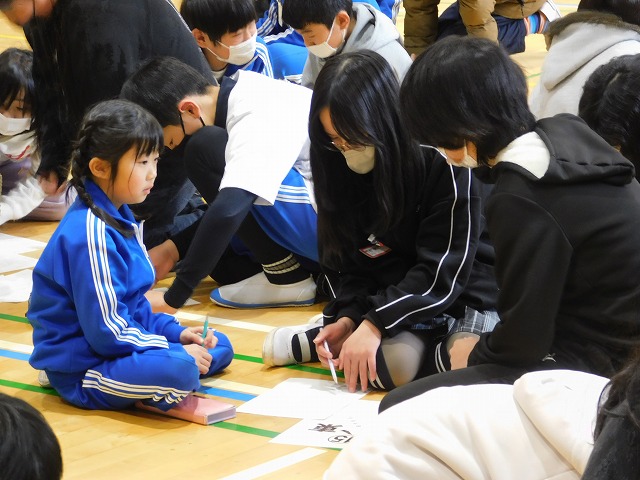
昼休みに、第4回通学班リーダー会を体育館で行いました。
ちょうど、これからの「交通安全」について考えていたところでした。
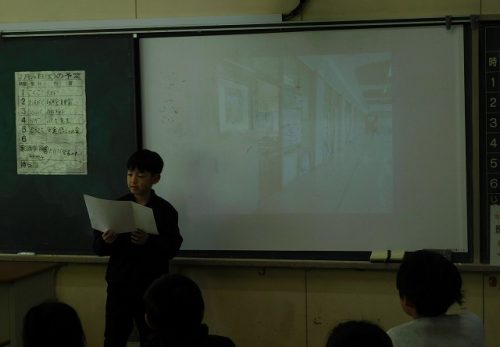
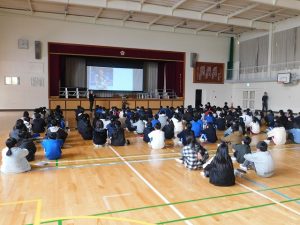
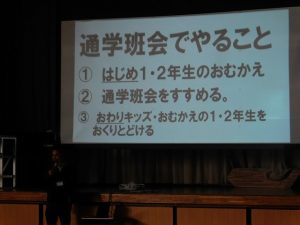
体育館では、分団担当のY先生がスクリーンに資料を映しながら会を進めていました。
分団長・副分団長さんは、スクリーンを見ながら話を聴いていました。
画面に注目・・・通学班会にどんな関係があるのかな?オリンピック金メダリストの写真です。確か、1種目でミスがあり5位発進。2種目目で大逆転の金メダルの選手です。満面の笑顔です!!
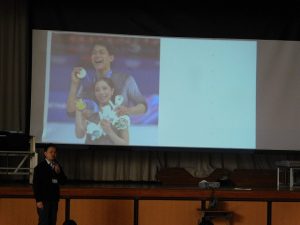
Y先生は、「なぜ、こんなに素敵な笑顔になれたんだろう。」と子どもたちに問いかけました。
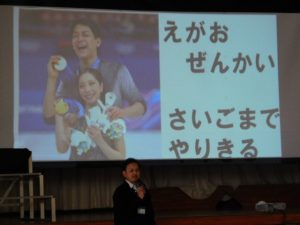
Y先生は、「辛いこともあっただろうけど、さいごまでやりきったからじゃないかな。」と子どもたちに話しました。
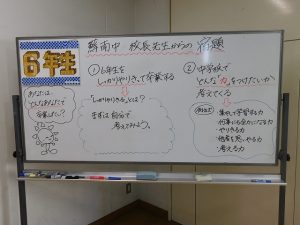
「やりきる」というと、6年生フロアのホワイトボードを思い出しました。蘇南中の校長先生からの宿題の1つ「6年生をしっかりやりきって卒業する」
通学班長・副班長さんも、この仕事を最後までやり切り笑顔になろう!という願いを込めた資料だと感じました。写真からして、この会のために作成したプレゼン資料です。
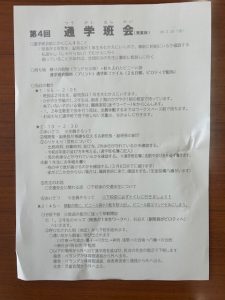
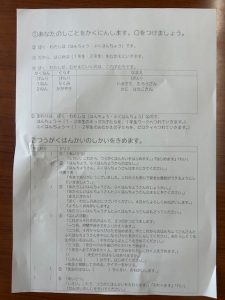
Y先生は生徒指導主事です。私は、生徒指導主事は全校児童の担任だと思っています。多忙な中でも、プリントに一工夫を加えて子どもたちに分かりやすく伝えていました。(ありがとうございます。)
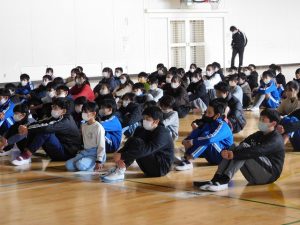
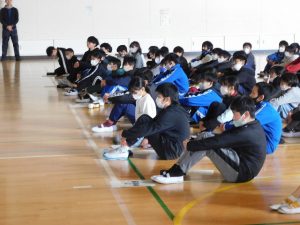
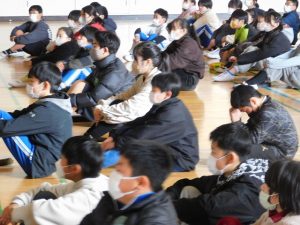
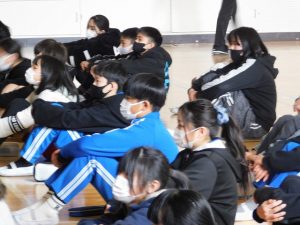
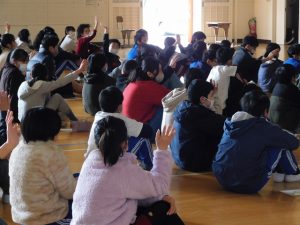
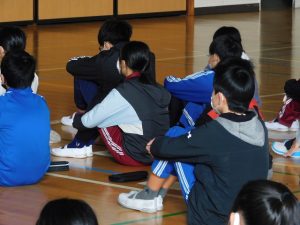
子どもたちもせっかくの昼休みの時間に集まっています。遊びたい気持ちもあるでしょう。でも、集中して話を聴いています。きっと、自分の分団の通学中の様子を思い浮かべている子もいるでしょう。それだけ、分団登校の重要性を感じているのだと思います。
次に、2月26日に行う「第4回通学班会」の進め方や役割分担を確認しました。
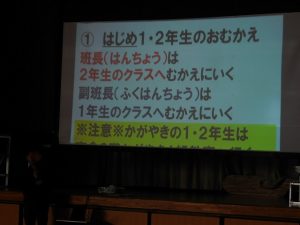
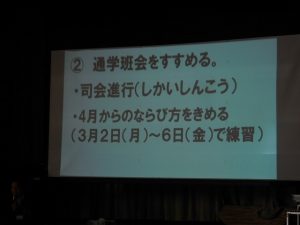
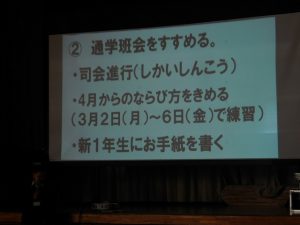
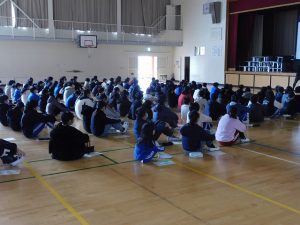
班によっては低学年からも副分団長が選出されています。
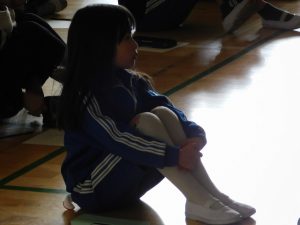
ここまでが一斉の時間。これからは、各班ごとでの相談の時間。ちょっと、異年齢の授業のようです。
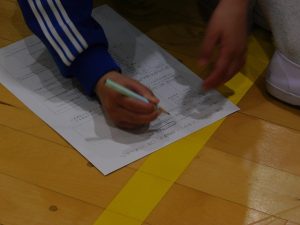
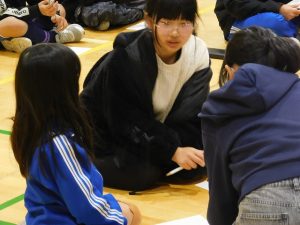
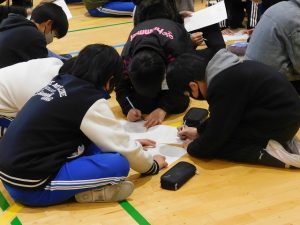
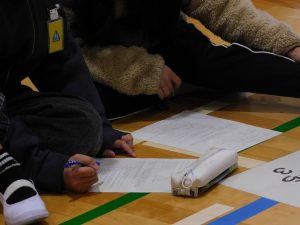
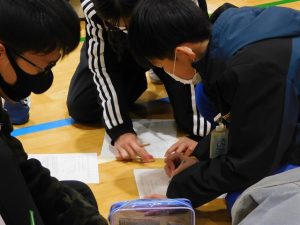
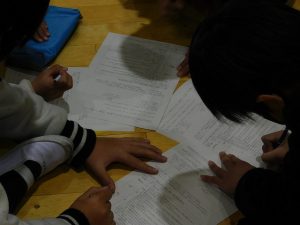
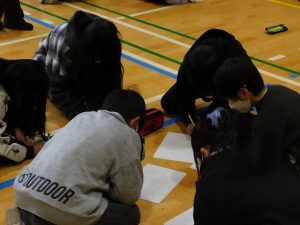
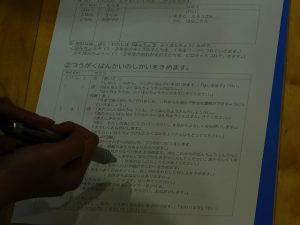

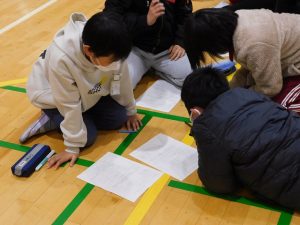
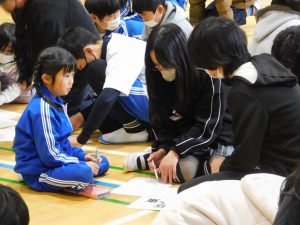
会の進行や1・2年年生のお迎えなどの確認ができたら、列を整えました。
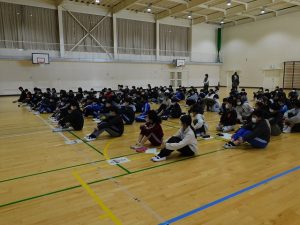
Y先生から、「みんな頼もしいです。学年が違っても、スムーズに話し合いができるのは、普段からの関りがありから。素晴らしいことです。」(私も同じことを考えていました。)
会が終わってから、ある6年生通学班長に声をかけました。この班は、毎日8時を少し過ぎたくらいに正門を通過します。班長さんが前に立ち、副班長さんが班員の後ろに立ち歩いてきます。簡単なようで、ここまで全員でまとまって歩ける班は実は多くありません。
さて、班長さんに訊きました。「あなたの班を4月からず~と見ています。一度もばらばらになることはなかった。時間が少し遅くなっても、1年生から6年生までがまとまって登校できました。班長として、何を考えているの?」
「正直、面倒と思うときもありました。でも、小さい子の歩く速さに合わせて、安全を考えています。」
急に声をかけられ、ドキッとしたかもしれませんが、しっかりと自分の言葉で自分の気持ちを伝えきりました。とても頼もしかったです。
「ありがとう。最後までやり切ってくださいね。」
■いつかの登校の様子■
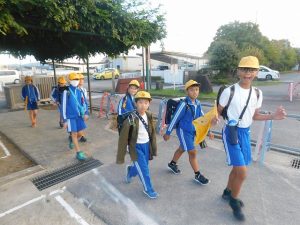
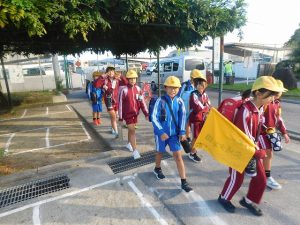
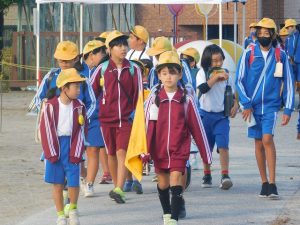
班長が先頭を歩く。班員が周りのペースを感じながら歩く。疲れた下級生を励ます上級生。ランドセルを代わりに持ってあげたり、背中をゆっくり押してあげたり・・・声をかけて励ましたり・・・4月から今日までで、子どもの間でもお互いの成長を感じていることでしょう。
調べてみると、子どもだけの集団登校は日本独自の文化のようです。中国やベトナムでは、子どもだけでの登下校は禁止されているほどで、保護者の送迎が必須とされているそうです。
保護者の送迎が必修となったら・・・例えば、正門前は交通渋滞です。
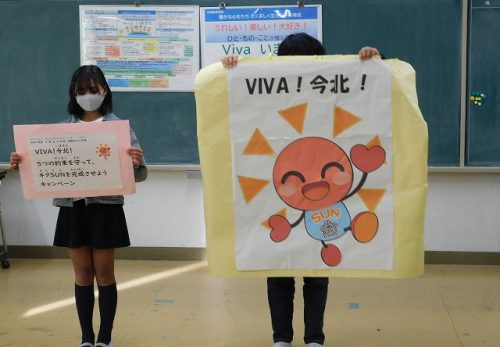
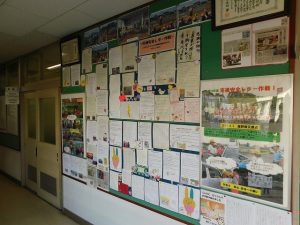
安全な登下校。学校では、ことあるごとに指導していきます。子どもたちは交通安全レター作戦をとおしてドライバーさんに働きかけるとともに、自分の交通マナーを見つめ、行動に移します。
ご家庭でもご指導よろしくお願いします。毎日元気に「行ってきます。(いってらっしゃい。)「ただいま。(おかえり。)」が聴こえますように。
🇵🇹 ポルトガル語(Português)訳
Durante o intervalo do almoço, realizamos a 4ª Reunião dos Grupos de Caminhada para a Escola no ginásio.
Estávamos justamente pensando sobre a “segurança no trânsito” daqui para frente.
Hoje também, mais uma vez, as “Mães do Trânsito” vieram à escola. Elas estão preparando os murais com as cartas que recebemos em troca da campanha das Cartas de Segurança no Trânsito, assim como presentes para os novos alunos que entrarão em abril do próximo ano. Em alguns períodos, elas vêm até três vezes por semana. Somos profundamente gratos por isso.
No ginásio, o professor Y, responsável pelos grupos de caminhada, conduziu a reunião usando slides projetados na tela.
Os líderes e vice-líderes dos grupos observavam a tela enquanto ouviam atentamente.
Então, na tela… o que isso terá a ver com a reunião dos grupos? Era uma foto de um atleta medalhista de ouro olímpico. Se não me engano, ele começou em 5º lugar após um erro na primeira prova, mas conseguiu uma grande virada na segunda prova e conquistou a medalha de ouro. Um sorriso radiante!
O professor Y perguntou às crianças: “Por que será que ele conseguiu ter um sorriso tão maravilhoso?”
E explicou: “Provavelmente porque, mesmo tendo passado por momentos difíceis, ele completou tudo até o fim.”
Ao ouvir “completar até o fim”, lembrei-me do quadro branco no corredor dos 6ºs anos. Uma das tarefas deixadas pelo diretor da Escola Sōnan foi: “Concluir com responsabilidade o 6º ano e se formar bem.”
Senti que o professor Y escolheu aquela imagem com o desejo de que os líderes e vice-líderes dos grupos também concluam suas responsabilidades até o fim e possam sorrir com satisfação. Parece que ele criou aquele material especialmente para esta reunião.
O professor Y é o coordenador de orientação estudantil. Eu acredito que esse cargo equivale a ser o “professor de toda a escola”. É um trabalho muito atarefado, mas mesmo assim ele sempre tem algum cuidado extra, não se limitando apenas ao material impresso.
As crianças também estavam reunidas no precioso intervalo do almoço. Deve ter havido vontade de brincar. Mas elas…
… ouviram concentradas. Certamente algumas imaginaram como está o comportamento do seu grupo no caminho para a escola. Isso mostra o quanto sentem a importância dos grupos de caminhada.
Em seguida, confirmamos como será conduzida a “4ª Reunião dos Grupos de Caminhada”, marcada para 26 de fevereiro, e quais serão os papéis de cada um.
Dependendo do grupo, até os alunos mais novos participam como vice-líderes.
Até aqui foi a parte coletiva. A partir de agora, cada grupo teve seu próprio tempo de conversa — quase como uma aula em grupos de idades diferentes.
Depois de verificarem a condução da reunião e o acolhimento dos alunos do 1º e 2º ano, organizaram as filas.
O professor Y disse: “Todos são muito confiáveis. Mesmo sendo de séries diferentes, conseguem conversar de forma tranquila porque já têm um bom relacionamento no dia a dia. Isso é maravilhoso.” (Eu pensei exatamente a mesma coisa.)
Após a reunião, falei com um líder de grupo do 6º ano. O grupo dele chega ao portão principal um pouco depois das 8h. O líder caminha na frente e o vice-líder atrás do grupo. Parece simples, mas não é fácil manter o grupo unido até o fim do trajeto. Talvez, ao se aproximarem do portão, alguns relaxem e acabem se separando. Mas desejo que continuem caminhando juntos, até o final, sem se dispersar.
Perguntei ao líder:
“Observo seu grupo desde abril. Nunca vi vocês se separarem. Mesmo quando atrasam um pouco, do 1º ao 6º ano vocês sempre chegam juntos. O que você pensa como líder?”
Ele respondeu:
“Para ser sincero, às vezes acho cansativo. Mas procuro ajustar o ritmo com os menores e pensar na segurança.”
Provavelmente ele ficou surpreso por eu ter falado com ele de repente, mas respondeu claramente com suas próprias palavras. Fiquei muito impressionado.
“Obrigado. Continue firme até o fim.”
■ Cena de um dia de caminhada para a escola ■
O líder vai à frente. Os integrantes seguem ajustando seu ritmo. Alunos mais velhos apoiam os mais novos quando estão cansados — carregando mochilas, empurrando levemente pelas costas, chamando com palavras de incentivo…
Desde abril até hoje, com certeza todos perceberam seu crescimento mútuo.
Pesquisando, descobri que grupos de caminhada formados apenas por crianças são uma cultura praticamente exclusiva do Japão. Em países como China e Vietnã, a caminhada sem acompanhamento de adultos é proibida, e os pais devem obrigatoriamente fazer o acompanhamento.
Se as famílias fossem obrigadas a deixar e buscar as crianças… por exemplo, o portão principal ficaria congestionado de carros.
A escola continuará dando orientações de segurança no trânsito sempre que possível. As crianças, por meio da campanha das Cartas de Segurança no Trânsito, sensibilizam os motoristas e, ao mesmo tempo, refletem sobre suas próprias atitudes no trânsito e colocam isso em prática.
Contamos também com o apoio das famílias.
Que todos os dias possamos ouvir um alegre “Tô indo!” e “Voltei!”.
🇵🇭 Taglish(Tagalog + English)訳
During lunch break, we held the 4th Commuting Group Meeting (Tuugakuban Meeting) in the gym.
We were actually just thinking about “traffic safety” for the coming months.
Today again — yes, again — the Traffic Moms came to school. They displayed the letters we received through the Traffic Safety Letter Project, and they are also preparing gifts for next year’s new first graders. Sometimes they come up to three times a week. We are truly grateful.
In the gym, Teacher Y, who is in charge of the commuting groups, led the meeting using slides on the screen.
The group leaders and assistant leaders listened while watching the screen.
On the screen… what does this have to do with commuting groups? There was a picture of an Olympic gold medalist. If I remember correctly, he started in 5th place because of a mistake in the first event, but made a huge comeback in the second event to win gold. His smile was so bright!
Teacher Y asked the students, “Why do you think he could smile like that?”
He continued, “Maybe because, even if it was difficult, he finished everything hanggang sa dulo.”
Hearing “finish until the end,” I remembered the whiteboard on the 6th-grade floor — one of the assignments from the principal of Sōnan Junior High: “Finish your 6th-grade year properly and graduate well.”
I felt that Teacher Y chose the picture to encourage the leaders and assistant leaders to also complete their responsibilities and finish with a smile. The presentation clearly seemed prepared especially for this meeting.
Teacher Y is the student guidance coordinator. For me, that role is like being the “homeroom teacher of the whole school.” It’s a very busy job, yet he always adds a thoughtful touch instead of giving out plain printed materials.
The children also gathered during their precious lunch break. Of course, many would have preferred to play. But…
… they listened with full concentration. Some probably thought about how their own group behaves on the way to school. It shows how much they understand the importance of group commuting.
Next, we checked the flow and roles for the upcoming “4th Commuting Group Meeting” on February 26.
In some groups, even lower-grade students serve as assistant leaders.
Up to this point it was the general session. After that, each group had their own discussion time — almost like a mixed-age class.
After confirming the procedures and how to guide the 1st and 2nd graders, they lined up.
Teacher Y said, “You are all reliable. Even if you are from different grade levels, you can discuss smoothly because you interact every day. That’s wonderful.” (I was thinking the same.)
After the meeting, I talked to a 6th‑grade group leader. His group arrives at the main gate just after 8:00 a.m. He leads at the front, while the assistant leader walks at the back. It sounds simple, but maintaining a united group until the end is not easy. Maybe some relax near the gate and the distance opens. Still, I hope they continue to walk together all the way.
I asked him:
“I’ve been watching your group since April. You have never broken apart. Even if you’re a bit late, all grades — from 1st to 6th — walk together. As a leader, what do you think about?”
He answered:
“To be honest, sometimes it feels tiring. But I try to match the walking pace of the younger ones and think about safety.”
He was probably surprised when I talked to him, but he expressed his thoughts clearly with his own words. Very impressive.
“Thank you. Please finish strong until the end.”
■ A scene from one day of commuting ■
The leader walks in front. The members adjust to each other’s pace. Older students encourage tired younger ones — carrying their bags, gently supporting their backs, or cheering them with words…
From April until today, they have surely felt each other’s growth.
When I researched it, I found out that children walking to school in groups without adults is almost unique to Japan. In countries like China and Vietnam, children are not allowed to walk to school alone and must be accompanied by parents.
If parents were required to drop off and pick up their kids, the main gate area would surely be congested with cars.
At school, we will continue to teach traffic safety whenever possible. Through the Traffic Safety Letter Project, children encourage drivers and also reflect on their own traffic manners and actions.
We ask for your continued support at home.
May we always hear cheerful “I’m going!” and “I’m home!” every day.